3D Summer - Watermelon: Evaluating Layered Cardstock Designs for Shadow Box Projects
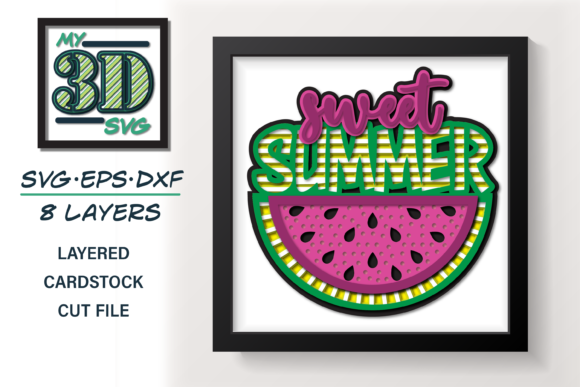
The pursuit of distinctive home decor and personalized gifts often leads crafters toward complex, multi-dimensional projects. Among the trending techniques in the crafting community, 3D layered SVG designs have gained significant traction for their ability to transform flat materials into visually striking art pieces. A prime example of this technique is the 3D Summer - Watermelon design, a layered summer svg that utilizes eight distinct layers to create depth and realism. This article provides a comprehensive evaluation of this specific digital asset, analyzing its structural complexity, compatibility with major cutting machines, and suitability for various creative applications.
Understanding the 3D Summer - Watermelon Design Structure
At its core, the 3D Summer - Watermelon is not merely a single silhouette but a carefully orchestrated composition of eight separate layers. Unlike standard single-layer cutouts that rely on color contrast alone for visual interest, this design leverages physical layering to simulate three-dimensionality. Each layer represents a different component of the watermelon motif—ranging from the outer rind and inner flesh to seeds and decorative accents—allowing the creator to build height and shadow through strategic spacing.
This approach distinguishes itself from simpler decal-style prints or two-dimensional vinyl stickers. The primary advantage of an eight-layer construction is the tactile quality it imparts to the final piece. When assembled correctly, the gaps between layers catch light and cast subtle shadows, enhancing the perception of volume. For enthusiasts interested in shadow box framing, this specific design offers a ready-made template that eliminates the need for manual vector tracing or layer separation, saving significant time in the pre-production phase.
Technical Compatibility and File Formats
One of the most critical factors in evaluating any digital craft file is its versatility across different software ecosystems and hardware platforms. The 3D Summer - Watermelon package addresses this by providing multiple file formats, ensuring accessibility regardless of the user’s preferred toolset. Understanding these formats is essential for making an informed purchasing decision.
- SVG (Scalable Vector Graphics): This format is the industry standard for modern cutting machines. It is directly compatible with Cricut Design Space and Silhouette Designer Edition. For users operating within these ecosystems, the SVG file allows for easy manipulation of individual layers, resizing without loss of quality, and direct sending to the cutter.
- DXF (Drawing Exchange Format): Primarily associated with Silhouette Studio, the DXF file ensures that users who prefer the native environment of Silhouette machines can import the design seamlessly. This format maintains the integrity of the eight layers, allowing for precise alignment during the cutting process.
- EPS (Encapsulated PostScript): This legacy vector format bridges the gap for professional designers and users of advanced software such as Adobe Illustrator, Make the Cut, Corel Draw, and Inkscape. The inclusion of an EPS file broadens the appeal of the 3D Summer - Watermelon beyond hobbyist machine users to include those who engage in more complex graphic design workflows.
The availability of these diverse formats reduces the technical barrier to entry. Users do not need to invest in expensive conversion software or hire a designer to translate files; the necessary tools are provided out-of-the-box. However, beginners should note that while the file formats are accessible, the assembly of eight layers requires patience and precision, particularly when aligning cut pieces before gluing.
Comparison with Alternative Decorative Styles
When considering how to incorporate summer themes into home decor, crafters often weigh several options. Comparing the 3D Summer - Watermelon against other popular methods highlights its unique value proposition and potential limitations.
Layered Paper Art vs. Flat Vinyl Decals
Flat vinyl decals are undeniably easier to produce and require less material waste. They are ideal for quick projects like labeling jars or decorating simple surfaces. However, they lack the depth and textural interest that defines the 3D Summer - Watermelon. If the goal is to create a focal point in a room, such as a centerpiece for a dining table or a statement piece above a mantel, the layered approach offers superior visual impact. The tradeoff is the increased labor involved in cutting, weeding, and adhering eight separate pieces rather than one.
Wood Carving vs. Cardstock Layering
For those seeking permanent durability, wood carving or laser-cut plywood presents a robust alternative. Wood offers a natural aesthetic and longevity that paper cannot match. Nevertheless, working with wood requires specialized equipment like laser cutters or CNC routers, which are not accessible to the average crafter. The 3D Summer - Watermelon design, optimized for cardstock, democratizes this 3D effect. It allows individuals with basic electronic cutting machines to achieve a similar aesthetic at a fraction of the cost and time. The limitation here is material fragility; cardstock is susceptible to humidity and physical damage, making it better suited for indoor display rather than outdoor use.
Digital Printing vs. Physical Layering
Another alternative is printing a high-resolution image of a watermelon on thick cardstock or canvas. While this method is fast and consistent, it lacks the artisanal charm of hand-assembled layers. Digital prints can appear flat and mass-produced. The layered design of the 3D Summer - Watermelon introduces human craftsmanship into the equation, resulting in a product that feels unique and bespoke. This distinction is particularly valuable for gift-giving, where the effort and personal touch are as important as the final appearance.
Ideal Use Cases and Display Recommendations
The versatility of the 3D Summer - Watermelon makes it suitable for a variety of contexts. Its bright, cheerful color palette and recognizable subject matter make it an excellent choice for seasonal decorations. Specifically, it fits well within the following scenarios:
- Shadow Box Framing: As suggested by the design’s intent, displaying this artwork in a deep-frame shadow box maximizes its three-dimensional qualities. The depth of the frame prevents the top layers from being crushed against the glass, preserving the intended spacing and shadow effects. This method also protects the delicate paper layers from dust and handling.
- Summer Party Centerpieces: For birthday parties, barbecues, or poolside gatherings, these layered pieces serve as eye-catching centerpieces. Their lightweight nature allows them to be easily moved or rearranged as part of a larger table setting.
- Seasonal Wall Art: Homeowners looking to refresh their interior decor for the summer months can use this design to add a pop of color to neutral walls. The geometric abstraction of the layers adds a modern touch to traditional motifs.
However, it is important to consider the environmental conditions. Since the design relies on cardstock, exposure to moisture or direct sunlight over long periods may cause fading or warping. Therefore, indoor display remains the optimal recommendation. For those living in humid climates, sealing the finished piece with a clear matte spray can offer additional protection without altering the visual texture.
Evaluating the Learning Curve and Material Costs
Before committing to a project involving the 3D Summer - Watermelon, it is prudent to assess the required skill level and resource investment. The eight-layer structure demands a certain degree of dexterity and organizational skills. Users must be comfortable with the "weeding" process—removing excess vinyl or paper from around the cut shapes—and possess the patience to apply adhesive precisely to avoid glue visible on the front of the layers.
In terms of materials, the cost is relatively low compared to other crafts. Standard cardstock is inexpensive and widely available. However, achieving the best results may require experimenting with different weights and textures of paper. Thicker cardstock holds its shape better but can be harder to cut cleanly on some machines. Conversely, thinner paper may tear easily during the layering process. Beginners might benefit from practicing the layering sequence on scrap paper before committing to their final colorful stock.
Conclusion: Is This Design Right for You?
The decision to utilize the 3D Summer - Watermelon depends largely on your crafting goals and current skill set. If you are seeking a quick, low-effort decoration, this design may involve more steps than necessary. However, if you value the satisfaction of creating intricate, multi-dimensional art and enjoy the meditative process of assembling layered pieces, this design offers a rewarding challenge.
Its strong compatibility with major cutting platforms, combined with its aesthetic appeal, makes it a versatile addition to any crafter’s library. By understanding the tradeoffs between effort and visual impact, you can determine whether this layered summer svg aligns with your creative aspirations. Whether used for personal home decor or as a thoughtful, handmade gift, the 3D Summer - Watermelon exemplifies how digital precision can enhance traditional paper crafts, bringing a vibrant slice of summer indoors.