Village 3D Christmas Svg
The holiday season has always been a catalyst for creativity, but the way we approach DIY crafting and small business production has shifted dramatically in recent years. Gone are the days when creating intricate holiday decor required hours of manual cutting or expensive professional services. Today, digital fabrication tools like Cricut and Silhouette machines have democratized design, allowing anyone with an internet connection to produce high-quality, personalized items from their kitchen table. At the heart of this shift is the demand for precise, scalable, and versatile vector files. This is where Village 3D Christmas Svg enters the conversation, offering a solution that bridges the gap between complex visual aesthetics and accessible manufacturing.
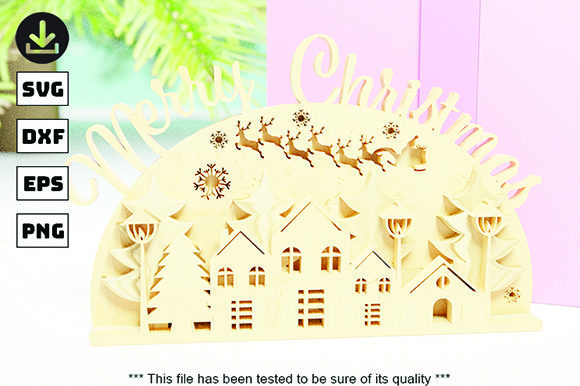
This specific digital asset is not merely a flat image; it is a functional blueprint designed for depth and dimensionality. The "Village" concept evokes nostalgia and warmth, essential elements for holiday marketing and home decoration. However, the "3D" aspect changes the game entirely. It transforms a simple silhouette into a layered composition that catches light, casts shadows, and adds physical presence to your projects. Whether you are a seasoned entrepreneur looking to stock your Etsy shop or a hobbyist wanting to create a unique gift for family, understanding the utility and application of such a file is crucial for maximizing its potential.
Understanding the Digital Workflow and File Versatility
One of the most significant advantages of using a digital vector file like this is the flexibility it offers across different platforms and materials. When you purchase Village 3D Christmas Svg, you are not just buying a picture; you are acquiring a toolkit. The package typically includes multiple formats—SVG, EPS, DXF, and PNG—each serving a distinct purpose in the modern creator’s workflow.
- SVG (Scalable Vector Graphics): This is the gold standard for cutting machines. Because it is vector-based, the file can be resized infinitely without losing quality. This is critical when moving from a small keychain to a large wall decal. The precision of the paths ensures that your cutting blade follows the design exactly as intended, which is vital for the interlocking pieces often found in 3D models.
- EPS and DXF: These formats expand your reach beyond personal cutting machines. If you plan to use CNC routers, laser cutters, or industrial plotters, these files ensure compatibility. For professionals working with wood, metal, or acrylic, the DXF format is particularly important for maintaining exact dimensions during automated manufacturing processes.
- PNG: While not used for cutting, the high-resolution PNG is useful for printing on paper, cardstock, or fabric. It allows for immediate visualization and is perfect for digital planners, printables, or social media content creation.
This multi-format approach reflects a broader trend in the creative economy: the need for assets that are "future-proof." A designer today might start with a Cricut for a weekend project but may want to outsource larger batches to a local print shop or switch to laser cutting for a more premium finish. Having access to all necessary file types eliminates technical bottlenecks and allows for seamless scaling of operations.
Material Compatibility and Production Realities
The aesthetic of a 3D village scene relies heavily on the material chosen. Unlike flat decals, layered designs interact physically with their substrate. The product description notes that this file is tested and perfect for materials such as wood, metal, paper, cardboard, and plywood. Each material brings a different character to the final piece.
For wooden crafts, particularly plywood or basswood, the 3D effect is most pronounced. Wood grain adds texture that complements the rustic charm of a village scene. However, working with rigid materials requires attention to detail. The stand size mentioned in the product details—approximately 0.787 inches (2mm) at original scale—is a critical measurement. If your material is thicker than the default setting, the layers may not sit flush, or the structure may become unstable. This is why the ability to resize the model in software like Illustrator or Photoshop is so valuable. Adjusting the proportions ensures that the structural integrity holds up under the weight and thickness of your chosen medium.
In contrast, using cardboard or heavy paper offers a lighter, more delicate feel. This is ideal for hanging ornaments or scrapbook embellishments. The ease of cutting softer materials makes this file accessible to beginners, yet the complexity of the design keeps experienced crafters engaged. Metal, while less common for hobbyists, opens up opportunities for high-end corporate gifts or durable outdoor signage, provided the cutting machine or laser cutter is capable of handling the gauge of the metal.
Applications Beyond Traditional Decor
While the name suggests traditional Christmas decor, the applications for Village 3D Christmas Svg extend far beyond the tree branch. In a market saturated with generic holiday items, differentiation is key. Here is how creators and businesses are leveraging this type of asset:
Personalized Gifting
The rise of the "experience economy" has led consumers to value personalized items over mass-produced goods. A 3D wooden village scene can be customized with names, dates, or specific color schemes. This level of personalization commands a higher price point and fosters customer loyalty. Imagine a custom village scene representing a couple’s hometown, complete with miniature versions of their favorite landmarks. The digital nature of the file allows for endless variations without additional setup costs.
Vinyl Decals and Stickers
Even if you do not intend to build a 3D structure, the individual layers of the SVG can be used independently. They work beautifully as vinyl decals for laptops, water bottles, or car windows. By cutting each layer in a different color of vinyl and applying them sequentially, you can achieve a faux-3D effect on flat surfaces. This technique is popular among students and young professionals who want to express their festive spirit in subtle, stylish ways.
Iron-On Transfers
For those in the apparel industry, the PNG and SVG files can be converted into heat-transfer vinyl (HTV) designs. Layering different colors of HTV creates a textured look on t-shirts, hoodies, and tote bags. The clean lines of the vector file ensure that the edges remain sharp even after washing, which is a common concern for clothing brands.
Technical Considerations for Success
To get the best results from Village 3D Christmas Svg, users must pay attention to technical nuances. The file is made in a 30cm x 30cm canvas in Illustrator, which provides a generous workspace for detailing. However, success depends on proper preparation.
Layer Management: Before sending the file to a cutting machine, it is essential to organize the layers correctly. In 3D models, certain layers act as supports or stands. Ensure that these are separated logically so that they can be cut and assembled in the correct order. Many cutting software programs allow you to assign different colors to different layers, making the assembly process intuitive.
Scaling and Proportion: As noted, the stand size is fixed at the original scale. If you decide to enlarge the design significantly, you may need to adjust the thickness of the connecting parts to maintain stability. Conversely, shrinking the design too much may result in fragile pieces that break during removal from the backing sheet. A good rule of thumb is to test a single layer first to assess how the material behaves at your desired size.
Software Proficiency: While the file is ready to use, familiarity with Adobe Illustrator or compatible cutting software enhances the outcome. Users should be comfortable opening SVG files, ungrouping elements, and checking for stray points or overlapping paths that could cause cutting errors. This minor investment in learning pays off in reduced material waste and fewer frustrated attempts.
The Future of Holiday Crafting
The trend toward digital craftsmanship shows no signs of slowing down. As technology becomes more affordable and user-friendly, the barrier to entry for high-quality creative production continues to lower. Consumers are increasingly educated about the value of handmade goods, leading to a robust market for items created with tools like Cricut and laser cutters.
Village 3D Christmas Svg represents a convergence of these trends. It offers a design that is visually appealing, technically robust, and commercially viable. For entrepreneurs, it provides a product that can be scaled efficiently. For creators, it offers a canvas for artistic expression. And for consumers, it delivers the warmth and uniqueness that define the holiday spirit.
As we look ahead, we can expect to see more integration between digital design and physical production. Augmented reality might one day allow customers to preview how a 3D village looks in their living room before purchasing. AI could assist in generating custom variations of existing templates. However, the core value remains the same: the human touch behind the design and the care put into the assembly. Files like this empower individuals to be part of that chain, turning pixels into tangible memories.
In conclusion, whether you are designing for profit or pleasure, Village 3D Christmas Svg is a valuable addition to your digital library. Its versatility, tested quality, and multi-format support make it a practical choice for a wide range of projects. By understanding its capabilities and respecting its technical requirements, you can unlock its full potential and create holiday experiences that resonate deeply with your audience. The key lies not just in having the right file, but in knowing how to adapt it to your specific needs and materials, ensuring that every cut, layer, and finish contributes to a cohesive and beautiful final product.