3D Butterfly SVG 3D SVG
In the realm of digital design and physical production, the transition from a static image to a tangible product requires precision, scalability, and format flexibility. The 3D Butterfly SVG 3D SVG asset is not merely a decorative graphic; it is a functional tool designed for integration into complex workflows involving cutting machines, printing services, and brand identity systems. For professionals ranging from small business owners to freelance graphic designers, understanding how to leverage vector assets effectively is crucial for maintaining consistency and efficiency.
This specific design offers a multi-format solution that addresses common bottlenecks in the creative process. By providing a comprehensive package—including SVG, PNG, EPS, and DXF files—the asset ensures compatibility across various software environments and hardware outputs. This guide explores how to integrate this butterfly design into your workflow, ensuring high-quality results whether you are producing vinyl decals, custom apparel, or marketing materials.
Understanding the Asset Structure and Compatibility
The value of a digital asset lies largely in its adaptability. The 3D Butterfly SVG 3D SVG comes as a ZIP file containing four distinct file types, each serving a specific purpose in the production pipeline. Understanding when to use which format prevents errors and saves time during execution.
- SVG (Scalable Vector Graphics): This is the primary working file for most modern cutting machines like Cricut and Silhouette. Because it is vector-based, the resolution remains crisp at any size. It is ideal for direct import into design software where layering and color separation might be required before cutting.
- EPS (Encapsulated PostScript): Often used in professional desktop publishing and by printers who require high-fidelity vector data. If you are sending designs to a commercial printer for large-scale signage, the EPS file ensures that the curves and paths remain mathematically precise without pixelation.
- DXF (Drawing Exchange Format): Essential for users working with CAD software or laser cutters. The DXF format translates the visual design into coordinate-based instructions that laser equipment can interpret, making it critical for industrial or semi-industrial fabrication processes.
- PNG (Portable Network Graphics): Included at 300 DPI resolution, this raster file serves as a preview asset or for uses where vector editing is unnecessary. It is suitable for web graphics, social media thumbnails, or quick mockups where immediate visual feedback is needed without opening heavy vector software.
By having all these formats in one package, you eliminate the need for third-party conversion tools, which often introduce artifacts or lose detail. This streamlined approach supports a cleaner, more efficient workflow from concept to final output.
Integration into Creative Workflows
The 3D Butterfly SVG 3D SVG is versatile enough to fit into multiple stages of a project lifecycle. Its application depends on the end goal, whether that is creating a personalized gift, launching a merchandise line, or developing a brand identity.
Apparel and Vinyl Decals
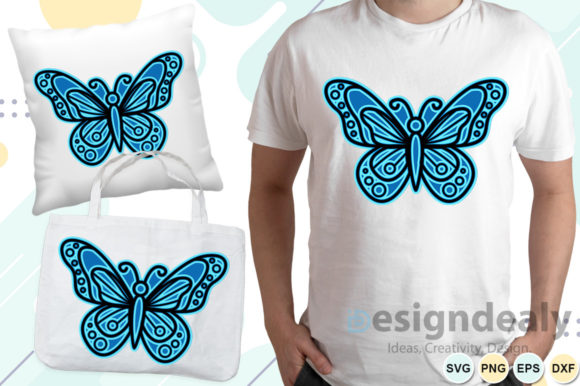
For entrepreneurs selling t-shirts, hoodies, or stickers, the vector nature of the butterfly design is paramount. When designing for heat transfer vinyl (HTV) or sublimation, the file must be mirrored and scaled correctly. The SVG file allows you to manipulate individual layers if the 3D effect is constructed using multiple overlapping shapes. This enables precise color matching to your fabric or substrate. Furthermore, because the file is resizable without quality loss, you can create a single design file that works for a child’s small shirt and an adult’s XXL hoodie, reducing the need to recreate artwork for different product sizes.
Branding and Logo Design
While a butterfly may seem whimsical, it is a powerful symbol in branding, representing transformation and elegance. Professionals can use the EPS version of the 3D Butterfly SVG 3D SVG to incorporate the element into a larger logo system. The CMYK color mode support mentioned in the asset description is critical here. Screen colors (RGB) do not always translate accurately to print. By starting with a CMYK-compatible vector file, designers ensure that the hues remain consistent across business cards, letterheads, and packaging. This consistency builds trust and professionalism in the final brand presentation.
Event Planning and Paper Crafts
For educators, hobbyists, and event planners, the DXF and SVG files open up possibilities for paper engineering. Scrapbooking, card making, and invitation design benefit from the clean lines of vector cuts. The "3D" aspect of the design likely implies depth through shading or layering. In paper crafts, this can be achieved by cutting multiple copies in different shades of paper and stacking them. The availability of the raw vector data allows users to adjust the opacity or split the layers manually to achieve the desired dimensional effect, offering a level of customization that pre-made raster images cannot provide.
Quality Control and Technical Specifications
When integrating external assets into professional work, quality control is non-negotiable. The 3D Butterfly SVG 3D SVG advertises itself as a 100% vector file with 300 DPI resolution options in PNG. These specifications address two major pain points in digital production: blurriness and scalability issues.
A 100% vector file means there are no embedded raster images within the core design structure. This ensures that every curve, anchor point, and path is editable. For users who need to tweak the design—perhaps to shorten a wing or adjust the thickness of a line—the vector format provides full access to the underlying geometry. This editability is crucial for maintaining brand guidelines or adapting designs to specific client requests without losing integrity.
The inclusion of CMYK color mode information is particularly relevant for print-heavy workflows. Digital screens use RGB (Red, Green, Blue) light to create color, while printers use CMYK (Cyan, Magenta, Yellow, Key/Black) ink. A common mistake is designing in RGB and expecting accurate print results. By utilizing assets prepared with print considerations in mind, or by easily converting the vector nodes to CMYK profiles in software like Adobe Illustrator or CorelDRAW, designers can avoid costly reprints and wasted materials.
Efficiency in Project Management
Beyond the technical aspects, the organization of digital assets impacts overall productivity. Receiving a well-structured ZIP file with clearly labeled formats reduces administrative overhead. Instead of searching for compatible versions of a clipart across different websites or spending hours tracing low-resolution images, creators receive a ready-to-use toolkit.
This efficiency extends to file management. Keeping the original source files (SVG/EPS) archived alongside the exported production files (DXF/PNG) creates a robust library. If a client later requests a modification, or if a new printing technology emerges that prefers a different format, the original vector source ensures that the asset remains viable for years to come. This long-term usability is a key consideration for freelancers and agencies managing client archives.
Practical Implementation Tips
To get the most out of the 3D Butterfly SVG 3D SVG, consider the following practical steps during implementation:
- Layer Separation: Before exporting or cutting, inspect the layers in your design software. If the 3D effect relies on shadows or highlights, separate these elements onto distinct layers. This allows for easier coloring and potential disassembly for layered craft projects.
- Color Profiling: Always check the color profile of your document. If you are designing for web, stick to sRGB. If preparing for print, convert to CMYK early in the process to monitor color shifts. Use the provided CMYK data as a baseline but verify against your specific printer’s gamut.
- Scaling Verification: Even though vectors are scalable, some cutting machines have minimum cut size limitations. Verify that the smallest details of the butterfly wings are above the threshold of your specific machine (e.g., Cricut Maker or Silhouette Cameo) to prevent registration errors or broken cuts.
- Mockup Testing: Use the included PNG file for quick visual mockups. Place it over photos of t-shirts, mugs, or stationery to visualize the final product before committing resources to production. This step helps catch aesthetic mismatches early in the planning phase.
Conclusion on Workflow Integration
The 3D Butterfly SVG 3D SVG represents a convergence of aesthetic appeal and technical utility. It is not just a picture of a butterfly; it is a modular component ready for deployment in diverse creative industries. By understanding the strengths of each file format within the package, users can streamline their production processes, reduce material waste, and deliver higher quality finished products.
Whether you are a seasoned pro optimizing your studio’s output or a hobbyist looking to elevate your scrapbooking projects, the flexibility of this vector asset supports a smoother, more professional workflow. The key to success lies in respecting the technical specifications—using vectors for scaling, verifying color modes for print, and organizing files for future access. In doing so, you transform a simple digital download into a reliable tool for sustained creative growth.